Towards Real-Time ECG and EMG Modeling on $μ$ NPUs
PhysioLite runs heart and muscle signal analysis on a microcontroller-sized chip at under 370KB — but real-world clinical validation is still missing.
The Thesis
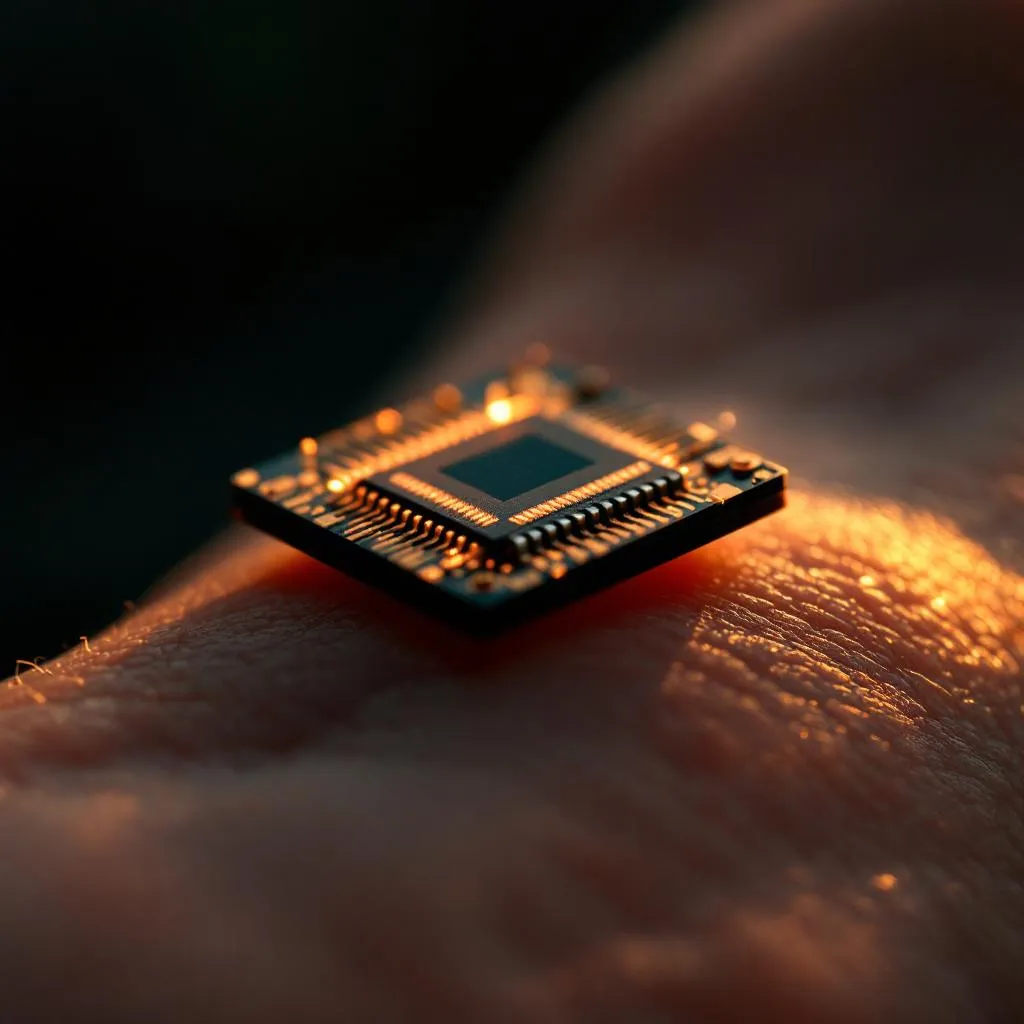
Most wearable health devices today offload their signal processing to a phone or cloud, creating latency, privacy, and battery penalties. PhysioLite is a model architecture small enough to run directly on a micro-NPU — a neural processing unit (a specialized inference chip) shrunk to microcontroller scale. The authors claim performance comparable to much larger Transformer-based models on ECG (electrocardiogram, heart electrical activity) and EMG (electromyogram, muscle electrical activity) benchmarks, at less than 10% of the size. The catch: benchmark comparisons do not yet constitute clinical validation, and the two target chips are niche industrial parts with limited ecosystem support.
Catalyst
Two things converged. First, chip vendors have recently shipped micro-NPUs — chips like the MAX78000 and HX6538 WE2 — that fit within the power envelopes of coin-cell batteries, something that was not practical three years ago. Second, Transformer-based physiological models have matured enough that there is now a clear, strong baseline to compress against, making the trade-off between size and accuracy measurable.
What's New
Prior state-of-the-art physiological signal models — large Transformer-based architectures sometimes called foundation models — rely on dynamic attention operations that micro-NPUs cannot execute efficiently due to fixed dataflow hardware constraints. Earlier lightweight alternatives either sacrificed too much accuracy or were never profiled on real constrained hardware. PhysioLite replaces dynamic attention with learnable wavelet filter banks (trainable signal decomposition filters that separate frequency components) and offloads positional encoding — the bookkeeping that tells the model where in a sequence each sample sits — to the CPU, making the remaining operations statically schedulable on NPU hardware.
The Counter
The benchmark results are real, but they do not tell us whether PhysioLite is ready for anything a clinician would trust. Physiological signal classification is notoriously sensitive to electrode placement, patient demographics, and recording hardware — none of which are controlled in a typical benchmark split. The authors compare against large foundation models, but the honest question is whether the accuracy gap they report is clinically meaningful, not just statistically smaller than expected. More fundamentally, the two target chips are not the hardware that ships in consumer wearables at scale; Apple, Garmin, and Samsung use proprietary SoCs where this architecture would need to be re-ported and re-profiled from scratch. The learnable wavelet approach is clever, but it sidesteps the deeper problem: real-world ECG and EMG signals are contaminated by motion artifact and electrical noise in ways that standard benchmark recordings do not capture. Until someone runs PhysioLite on a device worn by real patients and compares its outputs against a Holter monitor or clinical EMG lab, this is a promising compression result in search of an application.
Longs
- STMicroelectronics (STM) — produces microcontroller-class SoCs used in medical wearables where this class of on-device inference would run
- Analog Devices (ADI) — makes MAX78000, one of the two profiling targets in the paper
Shorts
- Cloud-dependent remote patient monitoring vendors whose value proposition assumes signal data must leave the device — PhysioLite's privacy-preserving on-device inference undercuts that dependency
- Companies selling Transformer-based wearable AI solutions that require Bluetooth or LTE connectivity for inference — if on-chip models match their accuracy, the connectivity requirement becomes a liability
Enablers (Picks & Shovels)
- MAX78000 SDK and Maxim/ADI model converter toolchain — directly used in the paper's latency profiling
- Himax HX6538 WE2 development kit — the second profiling target; availability of this kit enabled the benchmarking
- PyWavelets and differentiable wavelet libraries in PyTorch — the learnable filter bank design depends on these open-source tools
- MLCommons TinyMLPerf benchmark suite — provides the standardized tiny-model evaluation framework the field needs for fair comparisons
Private Watchlist
- Ambiq Micro — ultra-low-power microcontroller vendor whose customers build wearable biosignal devices
- Movella — wearable EMG and motion analytics company that could benefit from on-device inference
The Paper
The miniaturisation of neural processing units (NPUs) and other low-power accelerators has enabled their integration into microcontroller-scale wearable hardware, supporting near-real-time, offline, and privacy-preserving inference. Yet physiological signal analysis has remained infeasible on such hardware; recent Transformer-based models show state-of-the-art performance but are prohibitively large for resource- and power-constrained hardware and incompatible with $μ$ NPUs due to their dynamic attention operations. We introduce PhysioLite, a lightweight, NPU-compatible model architecture and training framework for ECG/EMG signal analysis. Using learnable wavelet filter banks, CPU-offloaded positional encoding, and hardware-aware layer design, PhysioLite reaches performance comparable to state-of-the-art Transformer-based foundation models on ECG and EMG benchmarks, while being <10% of the size ($\sim$370KB with 8-bit quantization). We also profile its component-wise latency and resource consumption on both the MAX78000 and HX6538 WE2 $μ$ NPUs, demonstrating its viability for signal analysis on constrained, battery-powered hardware. We release our model(s) and training framework at: https://github.com/j0shmillar/physiolite.